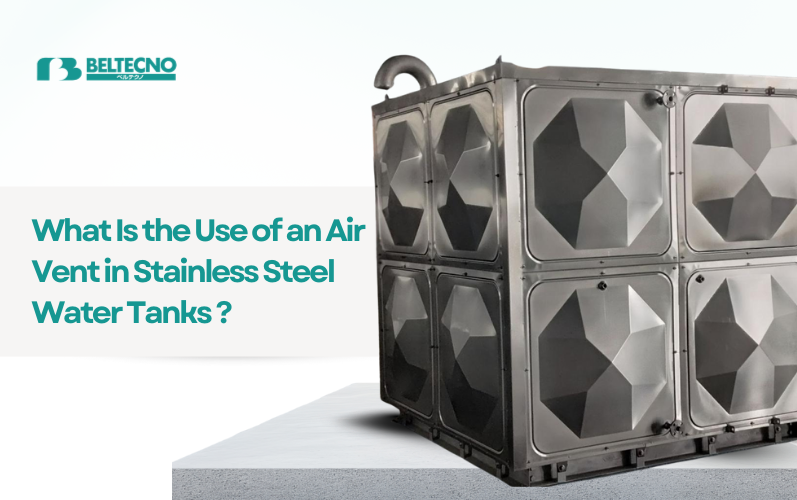
An air vent might seem like a simple component, but in reality, it protects the entire tank structure.
Without it, even the strongest stainless steel tank could face structural strain or worse, or collapse due to pressure imbalance.
This report explains why air vents are crucial and what can happen if they are not taken care of properly.
In this blog, we’ll break down what an air vent actually is, and why stainless steel tanks need them. We will also look at the functions they perform, the different types available, and the best solution.
By the end, you’ll see why such a small part deserves big attention. Let’s dive in!
What are Air Vent/ Air Vent Valves in a Water Tank?
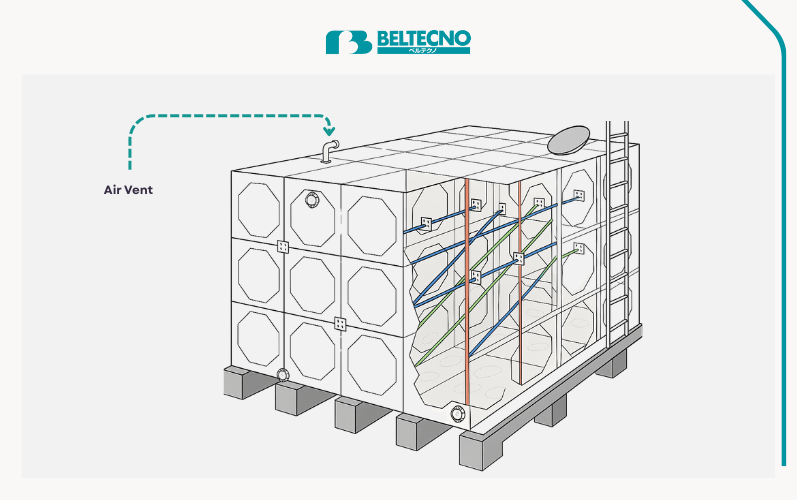
An air vent is a controlled opening that allows air to move in and out of a water tank during operation. You can also think of it as a pressure equaliser.
Here’s how it works.
When water pours into a tank, the air inside needs to have some room to escape; otherwise, the pressure starts building up. You can imagine it getting to a point where the tank is going to burst.
The same thing happens the other way round, when water is being pulled out of the water tank. The air needs to come inside to fill up the space that’s been emptied. If it can’t, then you get a vacuum forming inside.
Try to picture this: trying to take a sip from a bottle that hasn’t been opened properly, the water will come out unevenly with a glugging sound. This will happen because the air can’t get into the bottle to fill the space.
The same thing is happening in a water tank, without an air vent to let air in and out. The tank can’t balance the pressure inside and outside, which puts loads of stress on the panels and joints.
It can get so bad that the pressure difference starts to warp the tank walls, or even worse, makes them collapse over time.
Having an air vent / multiple air vent valves, though, solves this problem. It allows the air to just swirl in and out as needed, keeps the pressure in balance, the structure safe, and the tank working just fine.
Why Stainless Steel Tanks Need Air Vents / Air Vent Valves?
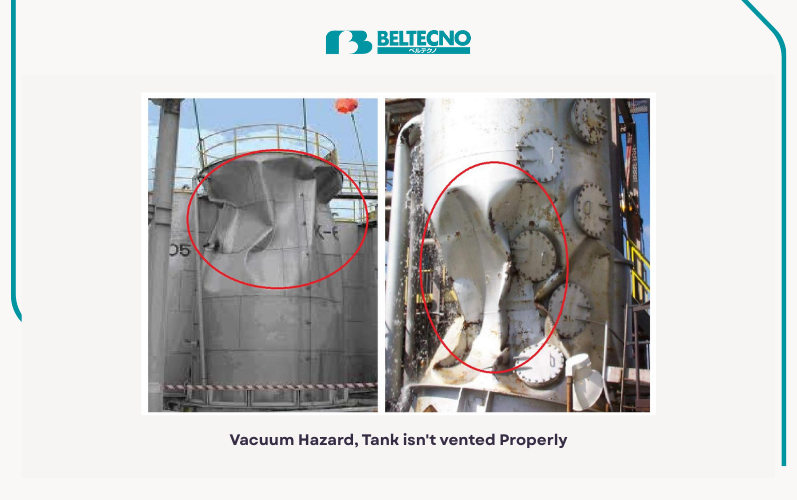
Now, you might wonder, stainless steel tanks are incredibly durable, so why bother about something as simple as an air vent?
The truth is, strength alone isn’t enough when pressure forces are at play.
Let’s consider a few scenarios.
- During filling: When water rushes into the tank, the trapped air inside needs a quick escape route. Without ventilation, internal pressure increases and may strain the welds or joints.
- During emptying: When water flows out rapidly (say, through a pump or gravity line), the tank needs air to enter. If it can’t, the vacuum effect can cause the panels to cave inward.
- Temperature fluctuations: Temperature changes can also cause air and water to expand or contract, slightly shifting internal pressure levels. A vent compensates for those natural changes.
In stainless steel water tanks, which are often modular and built with precision-fit panels, these pressure changes can cause noticeable distortions. Over time, that can compromise both aesthetics and function.
When tanks are properly vented, they perform quietly, efficiently, and safely. When they’re not, problems often go unnoticed until it’s too late.
Key Functions of an Air Vent/ Air Vent Valves
Air vents do more than just let air move. They perform several small but critical jobs that keep the tank balanced and long-lasting.
1. Relieving Internal Pressure
When water fills the tank, the trapped air must escape. The air vent releases this air gradually to prevent a build-up of pressure that could push against the tank walls.
2. Preventing Vacuum Formation
When the tank empties, the space left behind must be filled with air to balance the pressure. The vent allows outside air to flow in, preventing the vacuum that can crush panels inward.
3. Maintaining Tank ‘Breathing’
Tanks “breathe” – not in the literal sense, but through air exchange as water levels change. This constant movement of air ensures the system operates smoothly without sudden pressure changes.
4. Protecting Joints, Welds, and Panels
Without pressure balance, seams, bolts, and welds take unnecessary stress. Over time, this can cause leaks or warping. The vent prevents that by equalising pressure on both sides.
5. Ensuring Water Quality and Hygiene
A well-designed air vent keeps dust, insects, and debris out while allowing air movement. It helps maintain clean storage conditions and supports water hygiene.
Many people panic when they see water spilling slightly from the vent during tank filling. In fact, that’s perfectly normal. It means the vent is doing its job, releasing internal pressure as the tank reaches capacity.
Types of Air Vents Used in Water Tanks
There’s no single type of air vent that fits every tank. The right one depends on size, use, and environmental factors.
1. ABS Air Vents
ABS (Acrylonitrile Butadiene Styrene) vents are a popular choice for stainless steel tanks because the material is strong, lightweight, and corrosion-resistant. Beltecno, for example, uses imported ABS air vents for durability and consistent quality.
2. Size Variations
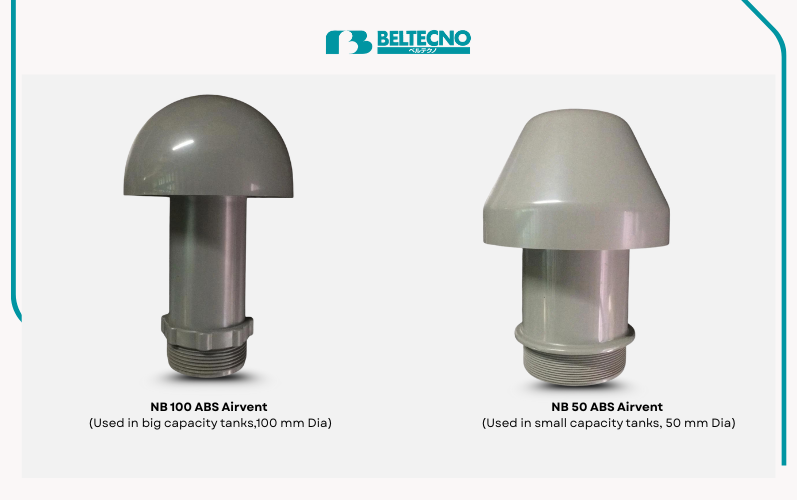
Beltecno uses two main vent sizes based on tank capacity:
- NB 100 ABS Airvent (100 mm diameter) for large tanks
- NB 50 ABS Airvent (50 mm diameter) for smaller tanks
This sizing ensures the right airflow for each tank volume, preventing under- or over-ventilation.
3. Passive and Active Vents
Passive vents rely on open pathways covered by mesh to let air move freely. Active vents include valves that open and close under specific pressure conditions, are ideal for systems where pressure variations are significant.
4. Material Options
Besides ABS, some manufacturers use stainless steel, aluminium, or polycarbonate depending on the tank environment. For stainless steel tanks, corrosion resistance and durability are top priorities.
5. Placement
The vent is usually positioned at the topmost point of the tank, where air naturally collects. Proper placement ensures efficient air movement and prevents stagnant zones.
Even a perfectly designed vent can underperform if it’s not installed correctly. That’s why good manufacturers, like Beltecno, ensure the vent’s location, size, and fitting are integrated into the tank design from the start.
Read about: Beltecno’s Lightweight yet Strong and Durable Stainless Steel Water Tanks
How Beltecno Air Vents Are Different?
Here’s a quick comparison table to highlight the difference:
|
Feature |
Generic Air Vent |
Beltecno Air Vent |
|
Material |
Basic plastic or mild steel |
Imported ABS (Acrylonitrile Butadiene Styrene) |
|
Origin |
Local or generic |
Imported from Japan |
|
Sizes |
One-size-fits-all |
NB 100 for big tanks, NB 50 for smaller ones |
|
Durability |
Prone to cracking or corrosion |
Long-lasting and weather-resistant |
|
Design precision |
Standard |
Custom-engineered for Beltecno modular tanks |
|
Hygiene control |
Basic mesh |
Enhanced air balance and hygiene-focused design |
|
Integration |
Added after fabrication |
Built as part of the tank system |
This attention to detail shows why Beltecno’s tanks are trusted for safety, performance, and hygiene.
Even a small part like the air vent/ air vent valves reflects the same philosophy that drives their entire manufacturing process, quality through precision.
Read About: Stainless Steel Tank Benefits
FAQs on Air Vents in Stainless Steel Water Tanks
Conclusion
It’s easy to overlook an air vent when looking at a massive stainless steel water tank. But that small component is doing some heavy lifting behind the scenes.
So the next time you’re evaluating a stainless steel tank, ask one simple question: What kind of air vent does it use? The answer will tell you a lot about the quality and reliability of the system.
To order or to enquire about your perfect stainless steel water tank, Contact Us!