Industrial Water plays a vital role in global manufacturing, energy production, and economic growth. Every major sector relies on treated water for cooling, processing raw materials, generating steam, and maintaining product quality.
As industries expand, the need for Industrial Water continues to especially in fast-developing regions like India, Southeast Asia, and Africa.
According to the UNESCO World Water Development Report, industries use over 20% of global freshwater withdrawals. In developed regions, this share rises sharply, reaching up to 57% in Europe, as noted in UNESCO’s 2022 review.
India’s industrial water demand is rising rapidly. Sectors such as manufacturing, chemicals, pharmaceuticals, and semiconductor fabrication are scaling up under major government-led initiatives.
With rising demand comes growing responsibility. Industries must improve water efficiency, ensure compliance, and maintain stable operations. This makes reliable Industrial Water Solutions essential for long-term sustainability.
This blog explores the key applications of Industrial Water, the types of water required, sector-specific uses, and the growing importance of modern water storage and treatment systems.
Understanding Industrial Water: What It Is & Why It Is Critical
Industrial water refers to water used for industrial processes such as cooling, cleaning, manufacturing, dissolving, transporting, heating, and chemical reactions. It includes:
- Process water (directly involved in production)
- Utility water (cooling, boilers, steam generation)
- Wash water (cleaning raw materials or equipment)
- Water for industrial use, such as treatment, recycling, and dilution
Depending on the industry, the water may require softening, filtration, purification, demineralization, or ultra-purification.
Industries rely on consistent water quality because impurities can damage equipment, affect product quality, or hinder chemical reactions. This is especially true in sectors such as microelectronics, pharmaceuticals, food processing, and petrochemicals, where even minute contaminants can impact outcomes.
Key Uses Of Water In Industry
Water is an essential element across multiple industrial operations. Here are the major forms of industrial water use, supported by global and Indian case studies.
2.1 Cooling Water
Cooling is the largest consumer of industrial water worldwide. Water is used to regulate equipment temperature, absorb heat, and prevent system failure.
Used in:
- Power plants
- Refineries
- Steel and metal processing
- Chemical plants
- Manufacturing units
Cooling towers, condensers, and chillers all depend on a steady supply of industrial water cooling to maintain stable operations. Poor cooling water quality leads to scaling, corrosion, and microbial growthissues that increase downtime and maintenance costs.
2.2 Boiler Feed & Steam Generation
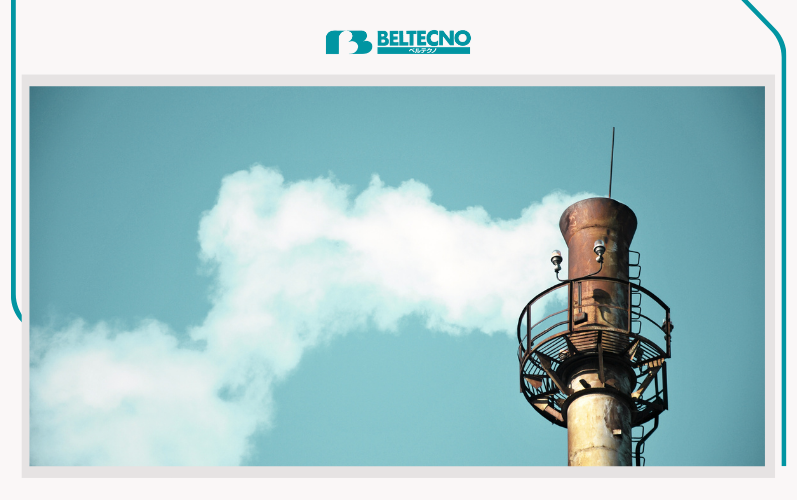
Many industries require high-pressure steam for heating, sterilizing, and power generation. Boiler feedwater must be treated to remove dissolved solids, oxygen, and hardness to prevent scale or corrosion.
Applications:
- Food processing
- Textile manufacturing
- Pharmaceuticals
- Power generation
- Paper mills
Boiler systems depend on an industrial water supply that is softened, demineralized, or deionized, depending on the steam grade required.
2.3 Process Water In Manufacturing
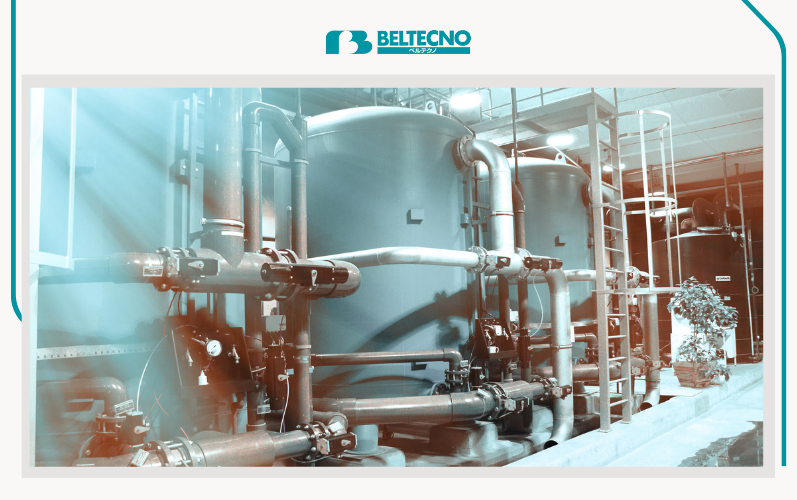
Manufacturing requires water as a solvent, ingredient, coolant, transporter, and cleaning agent.
Examples:
- Electronics: ultra-pure water for wafer cleaning
- Chemicals: solvent in reactions
- Textiles: dyeing and finishing
- Pharmaceuticals: purified water for formulations
- Automotive: washing, coating, plating
Process water quality determines the quality and yield of the final product.
2.4 Water Use In The Oil & Gas Markets
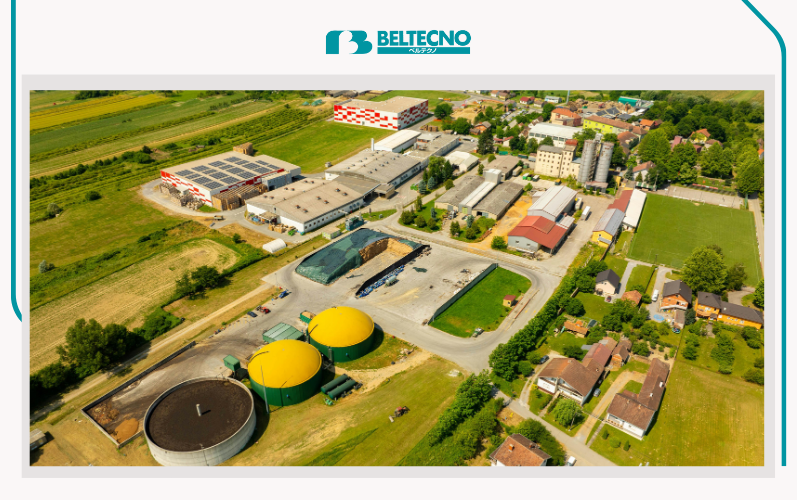
Globally, the energy sector relies heavily on water for extraction, refining, and petrochemical processes. The International Energy Agency (IEA) reports that the industry accounts for around 10% of global water withdrawals, while UNESCO and FAO note that industrial activities overall energy use just under 20% of global freshwater resources. This makes water a critical input for the sector and essential for maintaining safe, efficient operations.
It can be used for injection, processing, producing, treating, recycling, purifying, washing, cleaning, drinking, and other purposes. purposes
The oil and gas sector uses water for:
- Drilling
- Washing
- Injection
- Refining
- Petrochemical production
- Cooling
- Enhanced oil recovery (EOR)
Globally, this sector withdraws a significant share of industrial water resources, contributing heavily to industrial water usage.
2.5 Water Use In Pulp & Paper Mills
Despite the fact that digitalization has prompted a shift towards online shopping, the printing industry continues to be one of the biggest consumers of water globally.
Water is intimately linked with 85% of all three stages involved in the manufacture of paper, including pulping, bleaching, and washing.
A high quantity of water consumed in the pulp and paper industry is used only for processing, thus leading to the generation of large volumes of contaminated wastewater.
Paper mills rely on water for:
- Pulping
- Bleaching
- Washing
- Chemical dilution
Since 85% of paper manufacturing stages require water, the industry also generates large quantities of wastewater. Modern mills use advanced industrial water cooling systems and recycling setups to reduce water footprint.
2.6 Water in the Semiconductor Industry (Ultra-Pure Water – UPW)
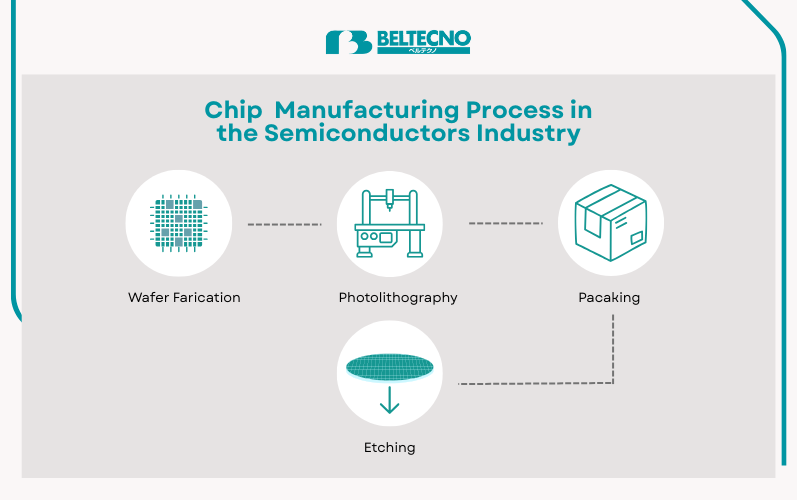
Silicon is one of the most critical materials used in the manufacturing of computer hardware, smartphones, automobiles, and numerous electronic devices. But pure silicon cannot be produced without ultra-pure water (UPW), a level of purity so high that even trace minerals or microscopic particles can compromise the entire manufacturing process.
This is why semiconductor production depends heavily on UPW as well as highly controlled chemical environments to prevent contamination.
During chip fabrication, the industry also uses extremely high-purity nitrogen gas (99.9999999%) to maintain an inert atmosphere, clean equipment, and act as a carrier gas in chromatography.
Together, UPW and high-purity nitrogen ensure that every step of the semiconductor process remains contamination-free.
Ultra-pure water is used in multiple stages of semiconductor manufacturing, including:
- Wafer rinsing
- Surface cleaning
- Chemical dilution
- Maintaining process stability
Since even a microscopic impurity can ruin an entire batch of chips, UPW becomes not just a utility but one of the most essential raw materials in semiconductor fabrication.
The Percentage Of Water Used for Industrial Purposes
Water is essential for nearly every manufacturing and processing activity worldwide. Whether it’s deionized water for electronics and pharmaceuticals or softened water for boiler feed systems, industries rely on consistent, high-quality water at multiple stages of production.
Across sectors, industrial facilities withdraw significant volumes of freshwater for cooling, cleaning, material processing, and product formulation. As global manufacturing expands, the pressure on freshwater resources continues to be especially high in regions where industries operate alongside communities with limited access to clean drinking and irrigation water.
Because of this growing demand, effective industrial wastewater management and sustainable water-use strategies have become critical. This section provides an essential overview of how industries use water, the challenges involved, and why efficient treatment and recycling solutions are now more important than ever.
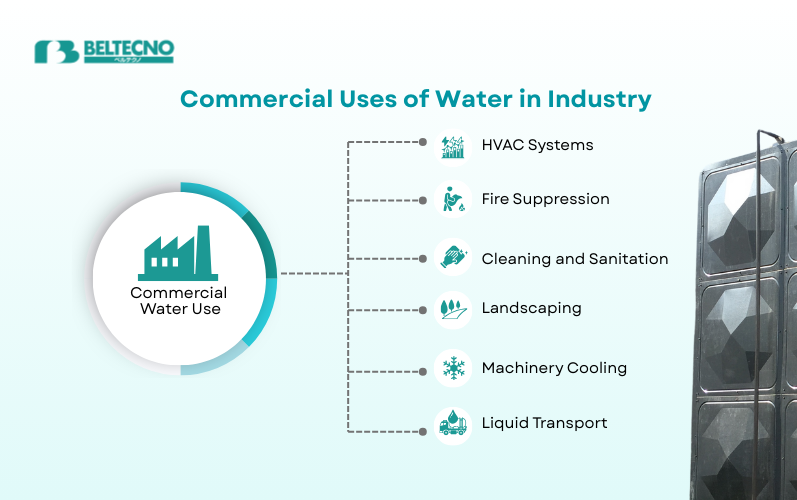
Commercial Uses of Water in Industry
Industries use water not just for manufacturing but also for a range of commercial uses, including:
Industrial Water Challenges: Quality, Scarcity & Efficiency
1. Scarcity and Depletion
- Many industrial clusters in India, China, and the Middle East operate in high water-stress regions. Over-extraction has caused groundwater depletion, forcing industries to shift toward recycling and reuse.
2. Variable Water Quality
- Impurities like hardness, silica, iron, and chlorides affect system efficiency.
3. Environmental Regulations
- Industries face stricter discharge norms and must adopt ZLD (Zero Liquid Discharge) or advanced effluent treatment.
4. Rising Industrial Water Demand
- Global demand is expected to rise by over 50% by 2050, driven by industrialization.
5. High Cost of Specialized Water
- Ultra-pure water, demineralized water, and soft water require advanced infrastructure.
- Industries need systems that handle heavy loads, maintain purity, and withstand corrosion.
Industrial Water Solutions: Treatment, Efficiency & Storage
Industrial water treatment involves multiple steps that ensure water meets the purity, safety, and performance standards required in modern facilities. The following table summarises the key technologies used across the industrial water industry for consistent and efficient operations.
| Process |
Purpose |
| 1. Filtration & Pre-Treatment |
Removes suspended solids, sediments, organic matter, and primary contaminants to prepare water for advanced treatment stages. |
| 2. Softening & Demineralization |
Removes hardness-causing ions and dissolved minerals. Widely used in boilers, cooling towers, food processing, and general manufacturing. |
| 3. Reverse Osmosis (RO) |
Core method for producing high-purity industrial water by removing dissolved salts, chemicals, bacteria, and fine particulates. |
| 4. EDI (Electrodeionization) |
Advanced polishing technology is used in pharmaceutical, semiconductor, electronics, and other ultra-pure water applications. |
| 5. ZLD & Recycling Systems |
Zero Liquid Discharge and water-recycling systems reduce dependency on freshwater sources and support environmental compliance. |
| 6. Stainless Steel Water Storage Systems |
Stainless steel tanks are preferred for industrial water storage due to: • High corrosion resistance • Scalability • Hygiene & contamination prevention • Longevity vs. MS, FRP, or plastic tanks Increasingly adopted in industries requiring reliable, high-purity, and long-life water storage solutions. |
Why Beltecno Is the Preferred Choice for Industrial Water Storage
Since 1947, Beltecno has been a trusted global leader in stainless steel industrial water storage solutions. Our SS panel tanks are engineered to support demanding industrial environments where reliability, hygiene, and efficiency are critical.
Stainless steel offers superior strength and corrosion resistance, ensuring tanks do not crack, leak, or degrade the way iron, MS, or FRP tanks often do. This delivers long-term durability, lower maintenance costs, and uninterrupted industrial operations.
Beltecno tanks are modular, lightweight, and easy to install in tight industrial spaces. Their hygienic, rust-free design prevents contaminationmaking them ideal for sectors like pharmaceuticals, food processing, manufacturing, chemicals, and cleanroom applications.
With decades of engineering expertise, international quality standards, and proven performance across industries, Beltecno remains the preferred choice for modern Industrial Water Storage that supports efficiency, sustainability, and long-term operational stability.
FAQs
Conclusion
Industrial water is more than a utility; it’s the backbone of modern manufacturing. With rising demand, stricter quality standards, and increasing water scarcity, industries must adopt better treatment, smarter recycling, and long-lasting storage systems. By upgrading to advanced purification technologies and stainless steel tanks, businesses can ensure consistent quality, reduce downtime, and secure a sustainable future for their operations.
Do you like to know more about our panel tanks made of stainless steel? You can send your needs to sales@beltecnoindia.com or download the brochure below. We can also be reached at +91 7300084028 or +91 9116009580. Get in touch with us to get the best industrial water tank.